Beyond a Simple Repair
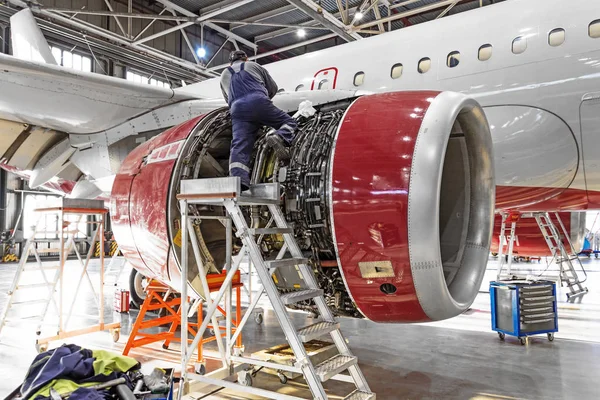
In aircraft maintenance, a structural repair is never simply a matter of replacing a damaged part or correcting a defect detected during an inspection.
Every repair has a direct impact on the aircraft’s safety, airworthiness, and operational availability. Therefore, when a crack, fatigue damage, or structural degradation is identified, the goal is not only to restore the affected component but also to ensure that the structure fully regains its ability to withstand the demands of service.
In an industry where reliability is a must, structural repairs are a fundamental part of any maintenance program.
The Importance of Detecting Damage Early
Many of the structural issues that arise in an aircraft are not visible to the naked eye.
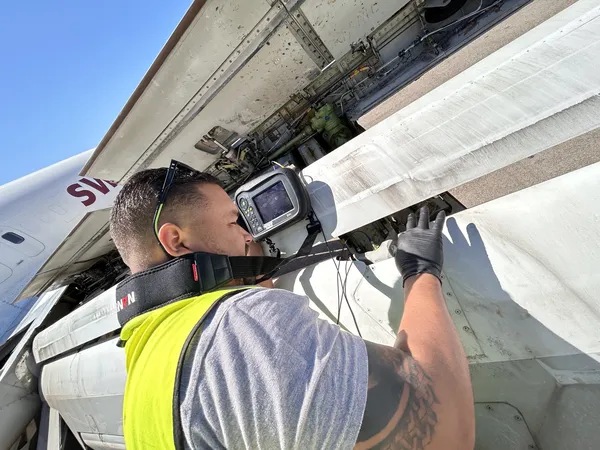
Periodic inspections and non-destructive testing (NDT) techniques allow for the early identification of defects such as fatigue cracks, corrosion, or damage caused by operational loads accumulated over thousands of flight hours.
Detecting these conditions at an early stage allows action to be taken before they progress to more serious damage, thereby reducing downtime, repair costs, and operational risks.
For this reason, inspections and structural repairs are typically part of the same process aimed at preserving the aircraft’s integrity.
Every repair presents a different challenge
No two structural repairs are exactly alike. The type of aircraft, the location of the damage, operating conditions, and manufacturer requirements determine the scope and complexity of each job.
At AVOTEST, our teams routinely work on various aircraft structures, tailoring each repair to specific maintenance needs.
Replacement of Structural Components on the Airbus A310
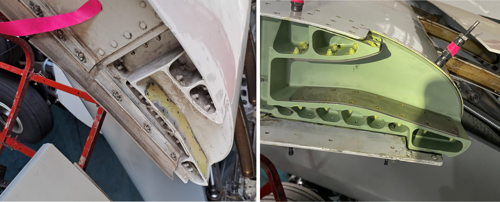
One of the recent projects carried out by our specialists was the implementation of Service Bulletin A310-57-2055, which involves the replacement of End Ribs 21 LH and RH.
The purpose of this procedure is to prevent problems associated with structural fatigue and potential crack initiation in a critical area of the aircraft. Replacing these components helps maintain structural integrity and extend the service life of the affected assembly.
Support for NDT Inspections
Not all structural procedures involve the direct repair of damage.
In many cases, it is necessary to remove certain components to facilitate access to critical areas that must be inspected.
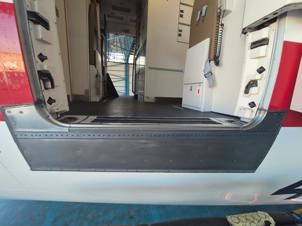
A recent example was the removal and subsequent reinstallation of the scuff plate on the rear passenger and crew door, which allowed a scheduled NDT inspection to be performed under optimal conditions and ensured that the original configuration was correctly restored afterward.
Pylon Structure Repairs
During an inspection using non-destructive testing, a crack was detected in a pylon structure.
Following an assessment of the damage, the affected pylon skin was replaced, restoring the structural integrity of an area that is particularly critical due to its role in connecting the engine to the aircraft.
Early detection and prompt repair prevented the damage from spreading.
(photo)
Repairs to the Wing Trailing Edge Structure
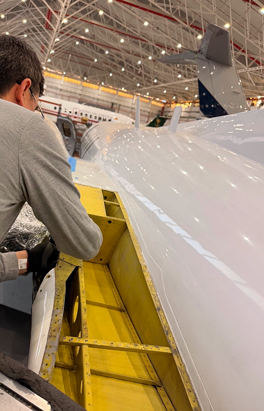
Another recent project involved the detection and repair of cracks in the trailing-edge rib located in the flap well area.
This type of damage has been reported repeatedly in certain aircraft models, such as the Cessna Citation 560 and S550. The application of appropriate repair procedures restored the structural conditions required for the safe operation of the aircraft.
The same Goal in Every Intervention
Although each repair has its own unique characteristics and challenges, they all share the same goal: to return the aircraft to service with the same levels of safety, reliability, and regulatory compliance.
Achieving this requires technical expertise, qualified personnel, approved procedures, and close integration between inspection and structural maintenance activities.
At AVOTEST, we approach each project with a practical and rigorous mindset, adapting to the specific needs of each operator and each aircraft. Because in structural repairs, every detail counts, and every action helps ensure that the aircraft can return to service with complete confidence.
Do you need support for a structural repair? Our team is ready to help you.